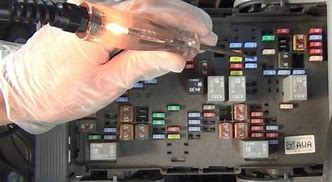
Automotive Fuses can be tested using testlights. The testlight is an electrical testing device that lights up a bulb when current flows through it in a complete circle, this means that the testlight has two ends; one must be connected to the positive terminal (live) and the other must be connected to the negative terminal […]
On-Board Diagnostic (OBD II) System/Protocol OBDII protocol is a software technology inbuilt in cars from 1996 till date that helps in diagnostics and programming of such cars. Just as OBD I, sensors are incorporated into almost all components and systems in the vehicle depending on the model or brand. When these sensors discovers any alteration in its proper value range, its send signals (messages) to an inbuilt computer known as the ECU (Electronic Control Units) or ECM (Electronic Controlled Module) or Brainbox. The ECU (brainbox) then interprets this signal (usually voltage) and send this information to the dashboard or other system where the warning lights and alarms are located, and then to the Diagnostic Port where various interpretation of the various faults detected in the vehicle can be accessed. The messages from the computer inbuilt in the car can only be interpreted or reprogrammed using a diagnostic scanner or a code reader.
The interpretation of this message is from the scanner may be difficult for a novice in automobile diagnostic technology, but modern scanner are designed for easy comprehension, software have been designed to help displayed this messages in computers and smartphones.
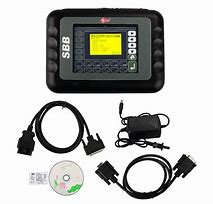
Diagnostic Scanners The major tool in Automotive Technology is the Diagnostic Scanner, the kind of scanner you have determines the kind of diagnostic operation you can perform. There are various kinds of diagnostic tools and more types are evolving as technology improves, in fact In-built scanners are been introduced into vehicles where the user can operate from the dashboard.
There are various classifications of diagnostic scanners of which includes; ELM327 Hardware Interface Hardware Interface with In-built software Wireless Connection Interface Display incorporated interface
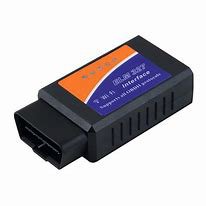
ELM327 ELM327 one of the cheapest kind of diagnostic tool available in the market, it is a program that helps interpret fault codes through special software application in smartphones and laptops, they are either Bluetooth enabled or Wi-Fi enabled. This little gadget can be useful in doing serious diagnostics when you understand it very well, but it’s primary purpose is to read fault codes and clear them. Like all diagnostic scanner, not all codes can be cleared by this device.
Wireless Bluetooth ELM 327
It is also limited in reading fault codes; it only read fault codes for Engine, Transmission and a few other components/systems.
ELM327 adaptor works with specific applications which are available in Windows, IOS and Android devices, there are also Symbian device version.
I will recommend the following Apps for you to use with your ELM327, I have tried them and they are some of the best App available.
Torque Pro
OBD Auto Doc
Dashboard
HobDrive These Apps are available in Play Store and Apple Store. Torque Pro: it’s considered the best Application for ELM327, in fact when I bought my ELM327 Adaptor, it was the App the manufacturer recommended for it. (Note that you these Apps has in-app purchases.) Torque is easy to display, you can use it for finding fault codes and clearing them, it also has a Dashboard that gives real time information, such as Throttle Speed, Coolant temperature and others. You can also create a vehicle profile and save test results. OBD Auto Doc: Very similar to Torque in functions, as they perform same thing. Dashboard: or Dashcommand it shows us real time information such as RPM, Power, Torque, Speed, Coolant Temperature, Mileage Rate, Fuel Economy and lots more. It also performs the normal function of testing for fault codes and erasing them. It gives various information over 60 of them, it also have more functions. Limitations of ELM327 Firstly, before I mention the limitations of this device, I would want you to know that this device may be very useful to a car salesman, but might not be very useful to a professional Mechanic. The reason is because there majority of the information a car dealer or one who needs to purchase a used car need is available on the device. Whereas a mechanic may need more information that are not available in this device for some complex repairs jobs.
The ELM327 cannot perform the following diagnostic check on the electrical and electronics system which is the basis of diagnostic technology in modern vehicles. Modern cars now have sensors in almost all parts; drivetrain, chassis, body, seat and doors, air-conditioning etc. So the ELM327 cannot be efficient in having complete diagnostics of all sensors and systems in modern vehicles.
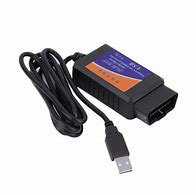
ELM 327
Also there are a lot of cloned ELM327 in the market, this clones are usually very cheap and are limited in diagnosing more advanced cars.
ELM327 is of various versions, have an old version device may not allow you to successfully diagnosed a recent car model.
Finally, car manufacturers are now providing stringent conditions for diagnosing of their brands, thereby enabling only their authorized devices and applications to effectively diagnose their product, and this is a stumbling block from many simple diagnostic tools.
With these limitations of ELM327 it doesn’t make it a useless device, but it only show us that we cannot solely rely on it for full-time diagnostics. There are more advanced diagnostic scanning tools out there with more options which makes automobile diagnostic stress free, but the better the device the greater the cost.
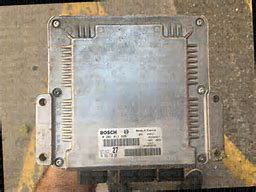
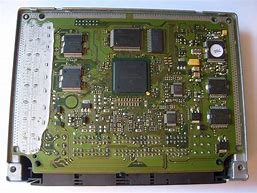
Electronic Control Unit (ECU) ECU which is Electronic Control Units, these are all the Control Units in the car. It means all the system which has the control over various sensors in the vehicle.
ECU
Before I continue on ECU, let me talk about Sensors. Sensors are electrically devices that send electrical signals from various components of the vehicle to the computer inbuilt in the car (ECU) whenever such system is not in normal working condition.
Sensors are located in almost all parts of the car, old cars used to have sensors in the Engine and Transmission, but modern cars have in all parts including wheels, lights, doors, body, seats and more. The more the sensors the more electronics system in the car, that is why almost all parts of modern cars have electrically connections and devices.
These sensors send signals to the ECU; each sensor signal is unique as it is interpreted as a code (fault code) which brings us back to the previous lessons. Also each component that has a sensor also has its own code.
This quality of interpretation (i.e. information) of signals provided by the diagnostic tool is what makes a diagnostic tool superior to others. The diagnostic computing system (I.e. ECU) receives signals through Controller Area Network (CAN) and processes it for interpretation for a diagnostic tool.
Now back to ECU, the size of the ECU depends on the numbers of System (group of components that works together to perform a single function) in the car. Old cars can have about fifteen Control Units, but modern cars can have up to ninety Control Units. Examples of control unit are Transmission, Motor Electronics, Telematics, Fuel pump, etc.
Interior of ECU
Controller Area Network (CAN) The CAN is a system that helps to control and aid communication between the ECUs. It helps to send message to the ECU. The CAN is responsible for features like PARKING ASSIST; this is when a sensor at the body of a car senses a close by object increases the Braking of the car.
It is also responsible for proper communication and responses of various Actuators and ECUs, such as ABS, ESP, SRS, and other systems in the vehicle.
When signals is not received by the CAN or when the CAN doesn’t send signals, the diagnostic system would not be able to determine the state of the actuators or systems.
You are going to find the term CAN, often when you engage in Diagnostics.
One day at the workshop I was diagnosing a vehicle with an MB C4 Star and on checking a control unit (AC compressor), I could not detect an exact fault, and the AC system was not working properly. On checking further I discovered that the CAN was not receiving signals from one of the components on the AC system. We had to trace the bad fuse causing the open circuit and replace it. Then the AC system started working properly.
There is also a signal control system in the vehicle known as SIGNAL ACQUISITION MODULLE (SAM), this is also a computerized system that helps acquire signals from various sensors in vehicles especially in modern vehicles with complex electronics and mechatronics system. This to
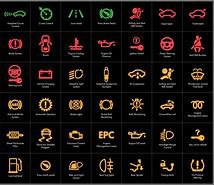
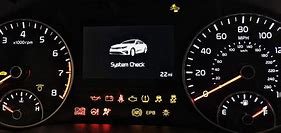
Warning Lights Warning Lights are very important, they help to inform you about any malfunctioning in your vehicle. Any time they come on, make sure you try to solve such problem. Resolving issues with Warning Lights would help you save more money, time and stress of running up and down with your car problem; it also improves the performance and prolongs the lifespan of the vehicle. There are numerous warning Lights, although they are usually universal several warning Lights are peculiar to various car brands and model.
Warning Lights
Sensors and Applications A sensor is a device that receives signals (as heat, pressure, light, motion, voltage etc.) from various components and system in the vehicle and sends this message to the ECU for interpretation and response by sending messages to the actuators to control these components or system.
The study of sensors and actuators and their diagnostics is not a part of this course, but this topics are available on other of our books.
Application of sensors in Braking and Stability System of Vehicles. ABS stands for Anti-lock braking System. It’s an anti-skid system that prevents skidding of wheels when emergency brakes are applied.
Some vehicles use abs sensors to detect vehicle speed. ABS sensors are usually located on each wheel. Speed sensors are usually located on the gearbox. They read output shaft rotation and send information to ECU for speedo reading. On some vehicle you can get both Abs and speed sensor. Speed sensor will be for the speed and abs for anti-skid.
Also ESP (Electronic stability program) present in vehicle such as Mercedes Benz aids emergency braking and stability just like ABS, it helps to increase braking impact on emergency braking when the yaw sensor senses an obstacle or pedestrian ahead of the vehicle, it also aids emergency parking, both ABS and ESP are present in all modern vehicles.
In Toyota there is also BA (brake assist) it works alongside the ABS and it comes up when there is need for Quick braking especially if an accident is about to occur, then any little pressure on the brake it will automatically reduce the speed of the vehicle to the barest minimum.
Importance of Event History in Auto Diagnostics Technology. With Years of experience in Auto Diagnostic and Repairs, I discovered that diagnosis and repair are more accurate and easier with proper events history of the vehicle.
In fact diagnostic tools do have options for events history and records, although this is available for modern vehicles. This shows how important record keeping of vehicle diagnosis and maintenance events is.
I advised vehicles owners to keep proper documentation of the service and maintenance events history, these records would aid quick and accurate diagnosis and service and it would be very useful to the Technicians. Also when you change Mechanics this would help your new mechanic understand your vehicle and take necessary precautions before making any repairs. It would also help the owner of the vehicle to understand his vehicle more and help him to take proper steps to maintain and the preserve the vehicle lifespan and it’s various components.
Just as health events history Records is important for proper health services so also are Events history records to proper diagnosis and service to the vehicle.
Importance of regular diagnostics operation Regular General body Check Up like Blood pressure Test, Blood glucose test and other medical examinations can help you avoid over 90% of health related issues.
Also Regular Auto diagnostics and servicing can help you avoid over 90% of diagnosable failure in your vehicle. This means that the vehicle would almost never experience engine knock, transmission knock or any related power train components. Also you will be able to know the exact faults and avoid wrong guesses, there are various types of diagnostic scanners available some of which are of user friendly that every car owner should own.
Mechatronics in Automobile Diagnostics Technology. Mechatronics is the application of Mechanical and electrical engineering principles in the operation of a machine or device. As we all know, early development of engines and machines where fully based on Mechanical Principles. The Automobile is one of these machines. After the first generation of Automobiles, other earlier types of Automobile, that is from Invention to about 1996 for some vehicles were fully based on Mechanical Principles and Electrical Principles which were independent of each other. The mechanical components were fully mechanically controlled such the IC engine, Braking system, Steering System, Transmission, Suspension etc. While the electrical components were fully electrically controlled such as the Electronics, Lightings and communications.
These developments made it necessary to have two different engineers to work on the Automobile, which are the Mechanical engineer and Electrical engineer. But in recent time technology has advanced leading to almost every component of the vehicle to work on Mechatronics principles and also causing the demand for one person to be proficient in the Mechanical and Electrical operations of the Automobile.
This implies that one engineer who is a Mechatronics Engineer can now work on every component of the Automobile, except other aspects like Body work, Painting and Spraying, Vulcanizing etc.
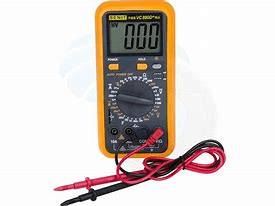
With the advent of Electric Vehicles, Computer programing applications and other latest technologies it is now a known fact that Mechatronics Engineering is the Way Forward. With the advent of mechatronics automobile diagnostic technology is taking a new look; this is because there is a need to have proper knowledge of the uses of sophisticated diagnostic tools and software for diagnosing and programming. Also the use of the multimeter, power probe, voltage supplier, testing lights and other electrical devices for testing of circuits, actuators and sensors is very importance.
Proper knowledge of electronics technology is need as some of these components now possess electronics circuits.
Electric Vehicle Electric vehicle Technology is still evolving as there may be more changes incorporated into the technology as times goes. With current day electric vehicle one can be assured that with proper knowledge of Mechatronics and Electrical engineering one can cope with the technology. Also possession of sophisticated diagnostic tools is essential in order to engage in their diagnostics and maintenance.
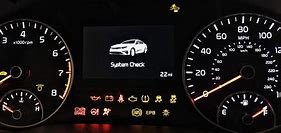
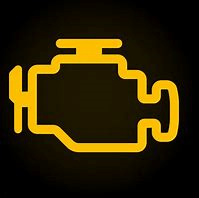
CHECK ENGINE LIGHT CHECK ENGINE LIGHT (also known as MIL) as know by many, is usually located on the dashboard of the driver’s side. it is one of the function lights that indicates a change in the normal working condition of the Vehicle Engine and other components.
Check Engine Light
Older cars usually had the light as the only information indicating a change in the normal working condition of the car engine. But for modern cars, there are other display that helps give more information about the malfunctioning of the engine been displayed on the dashboard.
Whether you are using a old car or a new car, one thing is sure, which is that the when the Check Engine Light is ON, the car needs to go in for diagnostic.
Tips to prolong your car lifespan; Diagnose your car anytime you see the CHECK ENGINE LIGHT ON Diagnose your car anytime you experience an accident or mechanical damage.
Diagnose your car anytime you notice any changes and noise that is unwanted.
This shows how important doing diagnosis when you notice the Check Engine Light.
The Check Engine Light turned ON can be caused by several malfunctioning in the Engine. Some of these malfunctioning includes; misfiring of Cylinders, Combustion chamber problems etc.
Code Readers and Diagnostic scanners Now let’s talk on the difference between a DIAGNOSTIC Code Reader and a Diagnostic Scanner as regards erasing of Check Engine Light.
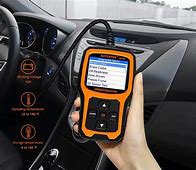
The Code Reader is used to read fault codes only, some Code Reader can also clear fault codes, i.e. MIL (Check Engine Light), the function of a Code Reader is limited.
A Diagnostic Scanner does not only read fault codes and clear MIL, some advance type also explain details about the fault, in fact very good one’s are also used for reprogramming of vehicle computer. Very powerful ones also show you the faulty system or parts, they recommend repairs options, some even teaches you how to disassemble and reassemble such faulty parts. Programmers and engineers are designing more powerful diagnostic scanning tools daily.
Current and Stored faults codes Check Engine Light is prompt on by various malfunctioning in the Engine system, it is an indication that the car needs to go for proper Diagnostics.
Check Engine Light can be erased or cleared from the dashboard, using a diagnostic Scanning tool or a code reader.
The Check Engine Light may not be erased when you try to erase it at all times. All fault code cannot be erased.
Fault codes which are stored and current cannot be cleared by a scanning tool, until the faulty system has been repaired, then the fault code can then be Erased.
Current: this means that the component or system has a fault. Current and Stored: this means that the component or system has a fault, and it must be replaced (that is it has a mechanical damage) before the fault can be cleared. Event: there is an fault history about the component or system.
Fault codes with current and event may be erasable. So you now have a little understanding of the various types of fault code, and those which can be cleared.
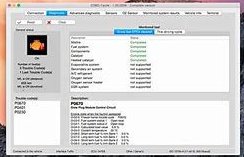
Software Applications for Diagnostics Tools Firstly, software applications are computer programs that help to interpret data, edit data and create data. Diagnostic scanning software interpret data (interpret data from the ECU), edit data and create data (Reprogramming of the ECU).
Diagnostics Software
The features and functions of a Diagnostic Software depend on the standard of its Scanner. A powerful scan tool would work with a powerful software application.
Now, many Diagnostics tools manufacturers also manufacture specific software programs that can only work with their tools, others give the licenses to only a few software developers. Most times when you buy a Diagnostic tool they come along with the software to run it.
Although these software applications are not usually free, there are many cracked versions online, just as there are many cloned Diagnostics tools online.
Cracked software version and Cloned scan tools Now, I will talk about disadvantages of cracked Software Version and cloned scan tool.
Cracked Software Version maybe useful until you try to upgrade it, or try to access the manufacturer online database, then it may get blocked, or it won’t be able to access it. Sometimes you need some Access online to do some powerful Diagnostics such as SCN coding.
Same thing goes for cloned scan tool, as it may not be able to access every component of the vehicle, it may not also perform some typical reprogramming of the ECU. But some bad software developers are constantly finding ways to break these protocols, just as the manufacturer is also ensure strictly protocols to secure their products.
IMMOBILIZERS An Immobilizer is a security device in vehicles placed in the Ignition key System that does not allow another key to turn on or start the engine of the vehicle. It is an anti-theft security device but sometimes it fails and it needs to be configured or reprogrammed.
Immobilizer took
When the user of a vehicle loss the keys of the vehicle, the immobilizer needs to be reprogrammed in order to use a new key to access the vehicle, same thing goes for creating a spare key. There are related other security devices that can be attached to it to provide more security functions. Diagnostics technicians also engage in Immobilizers reprogramming operations.
VIN- VEHICLE IDENTIFICATION NUMBER It is a number peculiar with every vehicle; it is used to identify a vehicle. From reading the VIN, you can identify the brand, model and other details. It is also important in acquiring spare parts; it is also used for Registration of vehicles. In fact when cars are stolen their VIN are removed from the body so that it cannot be easily located.
SCN- SOFTWARE CALIBRATION NUMBER coding This is a protocol used for manufacturers to secure their spare parts. It happens when you are to change a spare parts you must Program the new spare part to the vehicle computer before it would work properly, it is familiar with MB 2005- till date, and in some specific system like Transmission.
The VIN and SCN are important for diagnostics and Immobilizer Operations.
Automotive Diagnostics Technology One major problem faced by automobile technicians and users as regards automobile repairs and maintenances is correct diagnosis of faults and errors. This has caused many drawbacks in the automobile technology industry as many technicians and users end up being frustrated. This could lead to abandoning of the vehicle or selling it off as scrap.
Due to this development various automobile manufacturers thought of creating a system in the vehicle that would aid self-diagnosis and prompt warning lights and alarms in the case of detection of a failing/failed component or system in the vehicle. This self-diagnostic system had to be computerized and needs various sensors and control units to send signals and interpret them.
This lead to the Evolution of the On-Board Diagnostics (OBD) system/protocol, this was integrated in to vehicles and provided a port in the vehicle where the process can be carried.
OBD stands for On-board Diagnostic, this is a software develop in car to help aid diagnostics, and reduce guesses (trial and error) in car repairs.
The computer inbuilt in the car sends message which can only be interpreted by some specific devices. Firstly OBDI was first developed, it works by using the voltmeter to measure signal from the ECU (Electronic Control Unit) and the code display signifies a certain fault. This code is called a fault code.
When engines are built each component of the engine has installed a sensor within it, this sensors send electrical signals to the OBD system which helps to interpret this signal into various codes, which are the fault codes we know.
Older cars used OBDI software, and this feature was first installed for the Engine and Gearbox. But with the advent of OBDII Protocol, we can not only diagnose fault codes from engine and Gearbox, but from all parts of the vehicle including wheels, lights, doors e.t.c. and the later the car the better it’s features.
In order to interpret the messages in OBDII Protocol you need either a Diagnostic Scanner or a Code Reader. The On-Board Diagnostics (OBD I) system/protocol.
The OBD I Protocol works on a computerized system, in which sensors are placed in various components and system of the vehicle such as crankshaft, catalyst converter, engine block etc. the sensors send signals to an inbuilt computer known as the ECU (Electronic Control Units) or ECM (Electronic Controlled Module) or Brainbox. The ECU (brainbox) then interprets this signal (usually voltage) and send this information to the dashboard or other system where the warning lights and alarms are located, and then to the Diagnostic Port where various interpretation of the various faults detected in the vehicle can be accessed.
Although the OBD I technology has been neglected, several vehicles old vehicles that still operate on this technology are still in used till date especially in Africa and other developing countries of the world. How to diagnostics using OBD I protocol works.
OBD I protocol works using the Multimeter to read fault codes from the diagnostic port. This code are read as voltage values, each values signifies a particular fault, in order to know the values and their implications we need to have the codes and their interpretations which is usually manufacturer specified, there are usually reference materials that has defines these codes and their interpretation.
Also different vehicles have different method of testing and proper knowledge of the testing operation is necessary before engaging in test operation. Some old vehicles had OBD I & II protocol incorporated which aid one to also test for OBD I protocol using OBD II port.
(for more information on how to diagnose using OBD I protocol contact the author)
On-Board Diagnostic (OBD II) System/Protocol OBDII protocol is a software technology inbuilt in cars from 1996 till date that helps in diagnostics and programming of such cars. Just as OBD I, sensors are incorporated into almost all components and systems in the vehicle depending on the model or brand. When these sensors discovers any alteration in its proper value range, its send signals (messages) to an inbuilt computer known as the ECU (Electronic Control Units) or ECM (Electronic Controlled Module) or Brainbox. The ECU (brainbox) then interprets this signal (usually voltage) and send this information to the dashboard or other system where the warning lights and alarms are located, and then to the Diagnostic Port where various interpretation of the various faults detected in the vehicle can be accessed. The messages from the computer inbuilt in the car can only be interpreted or reprogrammed using a diagnostic scanner or a code reader.
The interpretation of this message is from the scanner may be difficult for a novice in automobile diagnostic technology, but modern scanner are designed for easy comprehension, software have been designed to help displayed this messages in computers and smartphones.
A conference where Automotive Technicians, Engineers, Students and Users round the globe interact and help each other overcome challenges faced in the ever innovative world of automotive technology.







 ASORO AUTOMOBILE TECHNOLOGY